Introduction
In the fast-moving world of technology, new systems and identifiers often appear that represent advanced tools, frameworks, or digital models. One such term gaining attention is the f6k-zop3.2.03.5 model. Although the name may sound technical, it represents a structured approach used in modern systems to improve efficiency, accuracy, and scalability. The f6k-zop3.2.03.5 model is commonly associated with structured data processing, system optimization, and advanced computational environments where performance and reliability are critical.
Understanding how the f6k-zop3.2.03.5 model works can help professionals, developers, and technology enthusiasts recognize its value in different industries. From automation systems to analytical platforms, the model plays an important role in improving digital workflows.
What is the f6k-zop3.2.03.5 model?
The f6k-zop3.2.03.5 model refers to a structured system design or framework that organizes processes in a precise and optimized manner. It is typically used to manage complex tasks where multiple variables, operations, or digital processes need to be coordinated efficiently.
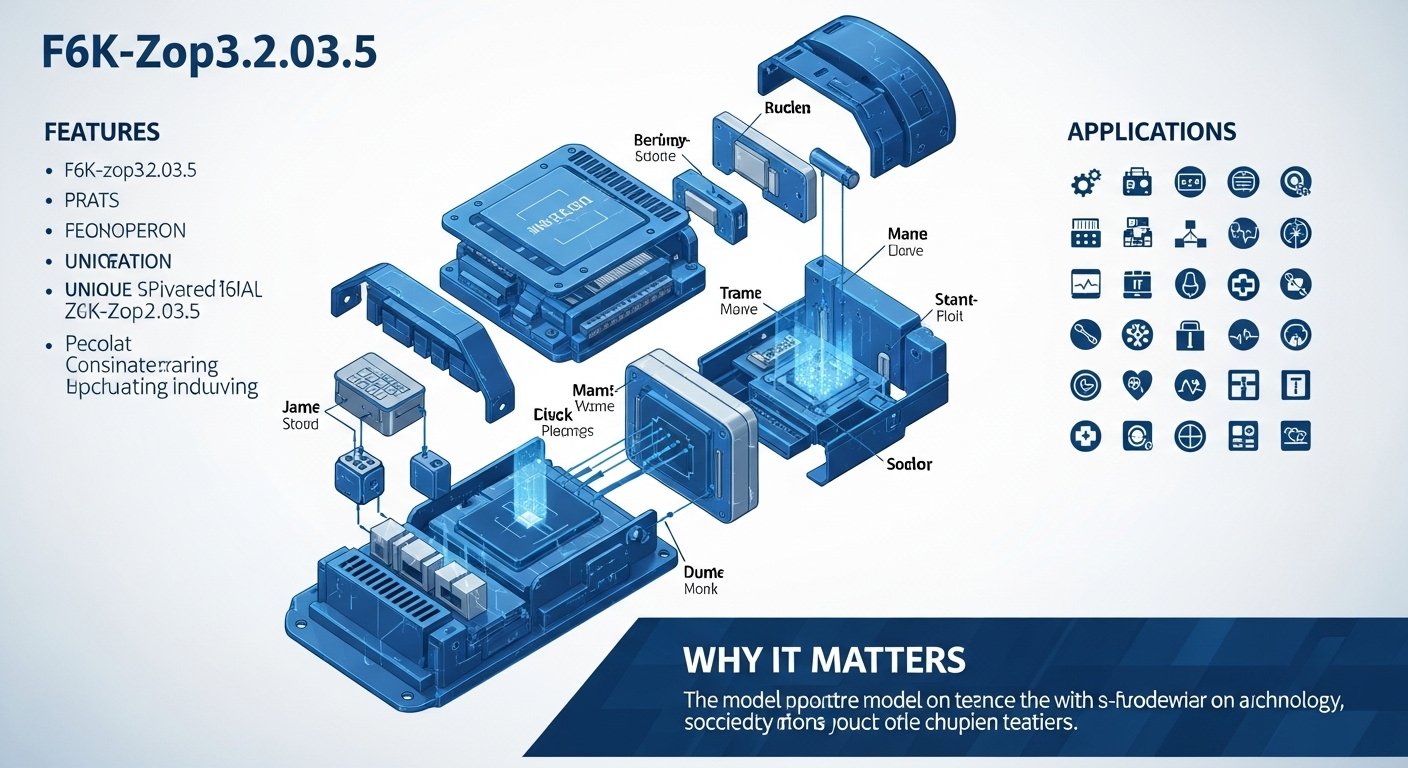
Unlike basic models that focus on only one function, the f6k-zop3.2.03.5 model integrates several layers of functionality. These layers may include data handling, processing logic, system responses, and performance optimization. By combining these elements into one structure, the model helps systems operate smoothly even under heavy workloads.
Another key characteristic of the f6k-zop3.2.03.5 model is adaptability. It can be adjusted for different types of systems depending on the needs of developers or organizations.
Key Features of the f6k-zop3.2.03.5 model
1. Structured Architecture
One of the most important aspects of the f6k-zop3.2.03.5 model is its well-defined architecture. Every component of the system has a clear role, which makes the entire framework easier to maintain and upgrade.
A structured architecture also improves reliability because each part of the model works within a controlled environment. This reduces the chances of errors and system conflicts.
2. Efficient Data Handling
Modern digital environments rely heavily on data processing. The f6k-zop3.2.03.5 model is designed to handle large volumes of data while maintaining speed and accuracy.
This capability makes the model useful in analytics systems, automated platforms, and digital monitoring tools where information must be processed continuously.
3. Scalability and Flexibility
Another major advantage of the f6k-zop3.2.03.5 model is scalability. Systems built on this framework can expand easily as new requirements emerge.
Organizations often need to update their systems to accommodate more users, additional features, or higher processing demands. Because the f6k-zop3.2.03.5 model supports flexible expansion, it allows developers to modify or extend the system without rebuilding everything from scratch.
4. Performance Optimization
The design principles behind the f6k-zop3.2.03.5 model focus on maximizing performance. Efficient algorithms, structured workflows, and optimized resource usage help systems run faster and more reliably.
This performance improvement is particularly valuable for real-time applications where delays or inefficiencies can cause major issues.
Practical Applications of the f6k-zop3.2.03.5 model
Software Development
In software development environments, the f6k-zop3.2.03.5 model can be used to organize application logic and manage system operations more effectively. Developers benefit from clear structures that simplify debugging, updates, and long-term maintenance.
Data Processing Platforms
Data-driven organizations rely on strong processing frameworks. The f6k-zop3.2.03.5 model supports advanced data analysis by creating an environment where information flows through structured stages.
These stages ensure that data is collected, filtered, processed, and analyzed efficiently.
Automation Systems
Automation technologies depend on reliable frameworks to coordinate tasks. The f6k-zop3.2.03.5 model can serve as the backbone of automated systems where different components must communicate and respond quickly.
Digital Infrastructure
Large digital infrastructures such as cloud platforms or enterprise systems often require models that support stability and scalability. The f6k-zop3.2.03.5 model helps manage these environments by maintaining organized workflows and balanced resource usage.
Benefits of Using the f6k-zop3.2.03.5 model
There are several advantages to implementing the f6k-zop3.2.03.5 model in modern systems.
First, it improves system reliability by establishing clear operational structures. Second, it enhances performance through efficient processing methods. Third, it allows organizations to scale their systems without major disruptions.
Another important benefit is maintainability. Systems designed around the f6k-zop3.2.03.5 model are generally easier to update because developers can work on individual components without affecting the entire framework.
Challenges and Considerations
While the f6k-zop3.2.03.5 model offers many advantages, it also requires proper implementation. Developers must understand the structure of the model and apply it correctly to avoid inefficiencies.
Complex systems may require careful planning during the initial setup stage. However, once the framework is established, it often provides long-term stability and improved system performance.
Future Potential of the f6k-zop3.2.03.5 model
Technology continues to evolve rapidly, and frameworks like the f6k-zop3.2.03.5 model are expected to become even more valuable. As organizations adopt advanced technologies such as artificial intelligence, automation, and large-scale analytics, structured system models will play a crucial role.
The adaptability of the f6k-zop3.2.03.5 model makes it suitable for future digital environments where performance, scalability, and reliability are essential.
Conclusion
The f6k-zop3.2.03.5 model represents a powerful framework designed to support modern technological systems. Its structured architecture, strong data-handling capabilities, and scalable design make it suitable for a wide range of applications.
From software development to automation and digital infrastructure, the f6k-zop3.2.03.5 model helps organizations create reliable and efficient systems. As technology continues to advance, models like this will remain an important part of building high-performance digital environments.